How Personalized SMS Communication Is Quietly Transforming Patient Loyalty in Healthcare
There is a clinic in Nairobi where a patient named Grace received a text message on her birthday from her doctor's office. It said: "Happy Birthday, Grace! Wishing you good health. We are glad to be your healthcare partner."
Grace had been to that clinic twice. She has been back six times since. That one message cost the clinic almost nothing. The goodwill it created, and the revenue that followed, is harder to put a number on, but it's real.
This is the quiet power of personalized communication in healthcare. It is not about marketing campaigns or broadcast promotions. It is about making a patient feel seen, remembered, and valued, at the exact moments that matter most to them. And SMS is, for now, the most powerful tool hospitals and clinics have to do exactly that.
The Moments That Define Patient Loyalty

Patient loyalty is not built at the point of treatment. It is built in the spaces between visits - in the way a facility communicates (or doesn't) when a patient is not physically there.
Think about the touchpoints that shape how a patient feels about their healthcare provider:
The first visit - does anyone acknowledge they are new, or are they just another queue number?
The period after a consultation - does the facility follow up, or is the patient left to manage alone?
The day before an appointment - do they get a reminder, or do they forget and miss it?
The day they are supposed to take medication - does anyone check in?Their birthday — does their hospital even know it exists?
Each of these is a moment when a well-timed, personalized message builds a relationship. Each one missed is a moment when the facility is silent, and the patient is reminded that to this healthcare provider, they're probably just a file number.
Why SMS, in an Era of WhatsApp and Social Media?
With so many messaging platforms available, why is SMS still the conversation worth having?
Reach
In Africa, mobile phone penetration is high, but smartphone ownership and reliable data connectivity are not universal. SMS reaches feature phones, smartphones, urban patients, and patients three hours outside Nairobi with equal reliability. A WhatsApp message that never delivers because a patient has no data is a missed communication. An SMS almost always gets through.
Open rates
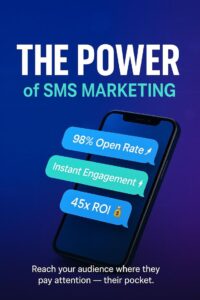
SMS open rates consistently sit above 90%, with most messages read within three minutes of receipt. Email newsletters, social posts, and app notifications do not come close. If you need a patient to see a message, SMS is your best option.
Trust
A text message from a known number, especially one carrying the name of the patient's healthcare facility, carries inherent credibility. It does not feel like advertising. It feels like a service. For healthcare specifically, these three factors add up to something significant: SMS is the most reliable way to reach patients when it matters.
The Four SMS Touchpoints That Matter Most
Not all communication has the same impact. These are the four moments where a well-crafted SMS does the most work:
1. The Welcome Message
A patient registers at your facility for the first time. Within minutes or hours of that registration, they receive a message:
"Welcome to [Facility Name], [Patient Name]. We're glad to have you with us. Your health is our priority. Save this number for future communication."
Simple. Personal. Costs almost nothing. But it establishes something important immediately: this facility knows my name, they communicate, and they care enough to reach out.
For returning patients - someone who has not visited in over six months — a re-engagement message works the same way. It signals that the facility noticed their absence and values their return. The welcome message is the handshake. It sets the tone for everything that follows
2. Appointment Reminders
A patient books an appointment and then life happens - work pressures, family demands, the general chaos of a busy week. By the time appointment day arrives, a significant portion of patients have either forgotten or de-prioritized it.
A reminder 24–48 hours before the appointment, carrying the patient's name, the date, time, and what to bring, addresses this directly. It is not invasive; patients almost universally appreciate it. It reduces no-shows. It keeps your schedule productive. It makes the facility look organized and professional.
For specialist clinics, surgical pre-admissions, and investigations requiring preparation (fasting, stopping certain medications), the value of a timely reminder is even higher. A patient who arrives unprepared because nobody told them what to do is frustrating for everyone.
3. Medication Reminders
Prescribed a patient a two-week antibiotic course? Managing a diabetic patient on daily metformin? Following up a hypertensive patient on a new antihypertensive?
A structured series of medication reminder SMS sent at the prescribed time, carrying the medication name and dosage, dramatically increases the chance a patient completes their treatment as prescribed. It also reinforces the patient's sense that their doctor is genuinely managing their care, not just writing a prescription and moving on.
For chronic disease management, this single touchpoint has the potential to reduce preventable readmissions and complications, outcomes that are good for the patient and good for the facility's reputation.
4. Birthday Greetings
This one surprises people with how much it works.
A birthday message from a healthcare facility is unexpected. It breaks the transactional nature of the doctor-patient relationship for a moment and replaces it with something human. It signals that the facility sees its patients as people, not just cases.
The message does not need to be elaborate. First name, birthday acknowledgment, a warm line about good health. Thirty words, maximum.
What it produces - goodwill, loyalty, word-of-mouth - is disproportionate to how little effort it requires.
Why Most Facilities Don't Do This (And What It's Costing Them)
Most hospitals and clinics are not doing personalized SMS communication well or at all is operational friction, not lack of intention. Someone has to manually compile the list.
Someone has to write the messages. Someone has to send them at the right time to the right person. In a busy facility where clinical staff are stretched and administrative teams are managing queues, this falls off the to-do list. Every time.
The second barrier is data. Patient phone numbers are collected at registration, but they often sit in a paper file, a spreadsheet, or a system that has no mechanism to use them for outreach. The data is there. The connection between the data and the communication does not exist.
This is exactly the gap that an integrated patient communication system closes.
Personalized SMS Communication in MedicentreV3 Hospital Management System

When your SMS capability lives inside your hospital management system, connected directly to your patient registration data, everything that makes this work happens automatically.
A patient registers. Their phone number is captured once. The system sends a welcome message. Their birthday is noted. On that date, a greeting goes out. Their appointment is booked in the system. A reminder triggers automatically 24 hours before. Their prescription is recorded. Medication reminders fire on schedule.
No manual lists. No human remembering to send anything. No patients who get missed because a staff member was too busy that day.
This is how MedicentreV3 HMIS handles patient communication. Phone numbers captured during patient registration flow directly into the communication module. Welcome messages to new patients, and re-engagement messages to returning ones, are automated from the moment of registration. Appointment reminders, birthday greetings, and medication reminders are triggered by the data already in the system.
The facility does not run a separate SMS campaign. They simply register patients the way they always have, and the system handles the communication that turns those registrations into relationships.