

Why Patient Experience Is the New Competitive Advantage in African Healthcare

There was a time when a hospital's competitive position was defined almost entirely by two things: its location and its specialists. If you had the only cardiologist in the region, patients came to you. If your facility was the closest one with a functional theatre, the choice was already made.
That calculus is changing
In Nairobi, a patient with a referral letter and a smartphone can now compare facilities, read reviews, ask their network, and make a considered choice about where to seek care, often before they leave the house. The same is increasingly true in Kampala, Lagos, Accra, and DareSalaam. In secondary towns, competition is arriving in the form of new private clinics opening within the catchment areas of established hospitals. Faith-based facilities are upgrading. Chains are expanding.
Clinical competence remains the foundation. But it is no longer sufficient differentiation on its own.
What is increasingly determining where patients go - and whether they return - is experience. How they were received. Whether anyone told them what was happening and why. How long they waited. Whether they got a message before their next appointment. Whether the facility felt like it valued their time and their dignity, not just their presenting complaint.
Patient experience is becoming the new competitive advantage in healthcare. And the facilities that understand this early will be the ones with fuller appointment books, stronger referral networks, and more financially sustainable operations over the next decade.
Growing Patient Expectations: A Market That Has Changed Permanently

The patients walking through hospital doors today are not the same as those of ten years ago.
Mobile penetration across East Africa now exceeds 80%. Urban populations have experienced digital service quality in banking, retail, and transport, and that experience has reset their expectations for every service interaction they have, including healthcare. A patient who uses M-PESA for instant transactions, books a ride in three taps, and receives real-time delivery updates for a supermarket order does not naturally accept a healthcare system that requires them to arrive at 7am and wait four hours without explanation.
This is not an entitlement problem. It is a market reality. Patient expectations are formed by the totality of their service experiences, not only their healthcare ones. Facilities that benchmark themselves only against other hospitals are missing the competitive context in which they actually operate.
Three specific expectation shifts are defining the current moment:
Transparency. Patients expect to understand what is happening to them, what it will cost, and why specific tests or treatments are being recommended. Clinical authority no longer operates in a black box. A patient who feels uninformed is a patient who feels disrespected, and who will look for a facility where they feel less so.
Efficiency. Time is a resource that patients - particularly urban, working patients - value acutely. Unnecessary waiting, repeated registration processes, having to explain their history to every new staff member they encounter, chasing results that should have been communicated automatically, these are friction points that erode satisfaction even when the clinical care is excellent.
Continuity. Patients increasingly expect their healthcare interactions to feel connected. A follow-up appointment should reference what happened in the last one. A specialist should know the referring physician's notes. A pharmacy should have the prescription before the patient arrives to collect it. When these connections don't exist, the patient experiences the gaps as a failure, even if each individual department did its job correctly.
Compliance and Regulatory Requirements

Patient experience is not only a market consideration. It is increasingly a compliance one.
Kenya's Digital Health Act 2023 established new requirements for health data management, patient records, and digital service delivery. The Social Health Authority (SHA), which has expanded coverage to millions of Kenyans, is building toward provider performance standards that will include quality and experience metrics, not just clinical output measures. Across the continent, health ministries are developing patient rights frameworks that create legal accountability for the quality of the care experience, not just clinical outcomes.
The emerging regulatory landscape is creating a compliance floor beneath patient experience. Facilities that treat it as optional are not just making a competitive mistake, they may be accumulating regulatory risk.
Accreditation requirements are evolving in the same direction. Kenya Health Quality Improvement Framework standards, and the international accreditation frameworks that leading private facilities pursue, increasingly weight patient-reported experience measures. The question "how did patients experience care here?" is no longer confined to satisfaction surveys, it is becoming part of the formal assessment of whether a facility meets the standard required to operate at the level it claims.
This means that investment in patient experience is not only investment in market position. It is investment in compliance readiness and institutional credibility.
Why Disconnected Systems Hurt Patient Satisfaction
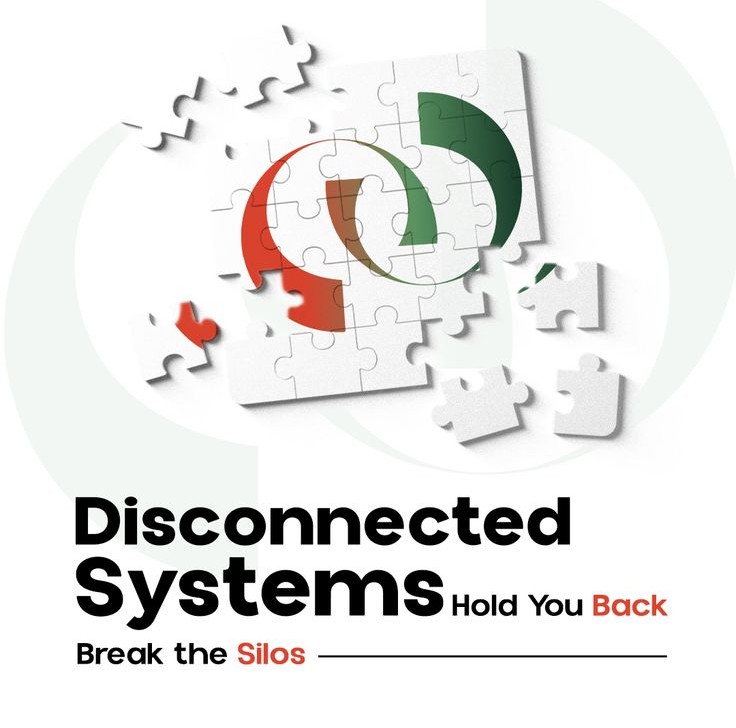
Here is a pattern that plays out daily in hospitals across Africa, and that most patients never articulate, but always feel.
A patient attends outpatient. The nurse records vitals on a paper triage sheet. The doctor writes notes in one part of the system, or on a paper file. The pharmacy receives a handwritten prescription. The billing desk generates an invoice from a separate system that doesn't reflect what the doctor ordered. The patient pays, collects medication, and is told to return in two weeks.
Two weeks later, they return. The doctor opens the file. The previous notes are there, if the file was correctly stored and retrieved. The lab result from the test ordered at the last visit may or may not have been filed. The medication dispensed is not visible to the prescribing clinician. If the patient has seen a different doctor today, that doctor is starting largely from scratch.
None of this is negligence. It is the predictable consequence of disconnected systems - clinical documentation, pharmacy, lab, billing, and patient records operating as separate islands without a shared data flow.
The patient experiences the consequence of this disconnection at every touchpoint. They repeat information they already gave. They wait while staff chase down records. They receive an invoice they don't understand because nobody has explained the connection between the treatment they received and the charges on the bill. They leave without a clear picture of their care plan.
Patient dissatisfaction in most healthcare settings is not primarily driven by clinical failures. It is driven by process and communication failures that disconnected systems make structural.
The data supports this consistently. A large body of patient satisfaction research across healthcare settings finds that the factors most correlated with overall satisfaction are not clinical outcomes - they are communication quality, waiting time management, and whether patients feel their information was handled competently. All three of these are directly influenced by the quality of the systems connecting care delivery.
The Role of Integrated HMIS Platforms

An integrated Hospital Management Information System is the operational backbone that transforms a collection of departments into a coherent healthcare facility - from the patient's point of view.
What integration actually means, in practical terms, is that information captured at one point in the patient journey is available - in real time, in the correct format - at every subsequent point. The patient registers once. The nurse documenting vitals sees the registration. The clinician writing the consultation note sees the vitals. The pharmacist receiving the prescription sees the clinical note. The billing desk sees everything that was ordered, performed, and dispensed. The patient receives an invoice that reflects a coherent clinical encounter, not a fragmented guess at what services were provided.
An integrated HMIS platform removes the need for workarounds by making information flow the default. The friction that currently degrades patient experience - repeated registration, missing records, unexplained charges, disconnected care - becomes structurally addressable rather than depending on individual staff heroics every shift.
The business case runs in both directions. Integrated systems improve the patient experience by making care feel coherent. They improve operational efficiency by eliminating the cost of maintaining disconnected processes. And they improve financial performance by ensuring that every service delivered is captured, billed, and paid.