What Is FHIR and What Does It Mean for African Hospitals? (2026 Guide)
Imagine a patient walks in the emergency casualty unit unconscious. No ID. No next of kin reachable. No medical records in sight.
Your team starts from scratch - guessing allergies, duplicating tests, making decisions in an information vacuum. Meanwhile, that patient's full history - their chronic conditions, their current medications, a recent lab result, is in a system at the clinic they visited three weeks ago. A system that can't talk to yours.
This is not a hypothetical. It plays out daily in hospitals across Africa. And it will continue to - until the systems managing patient data are built to share it.
That is what FHIR is for.
What Is FHIR, and Who Created It?
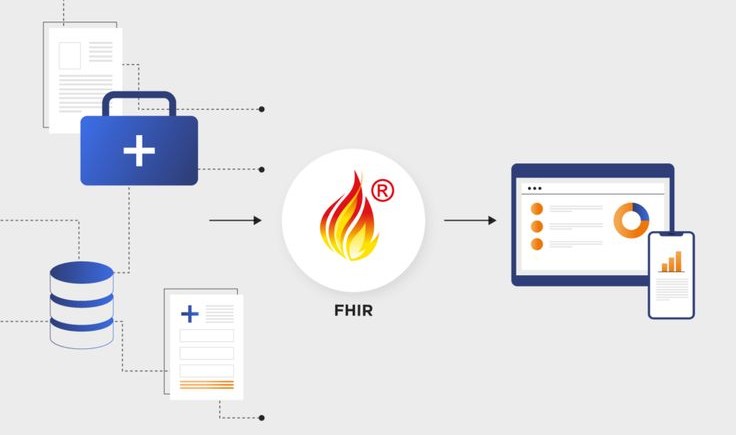
Fast Healthcare Interoperability Resources (FHIR) is an international standard for how healthcare data is structured, stored, and shared between different systems.
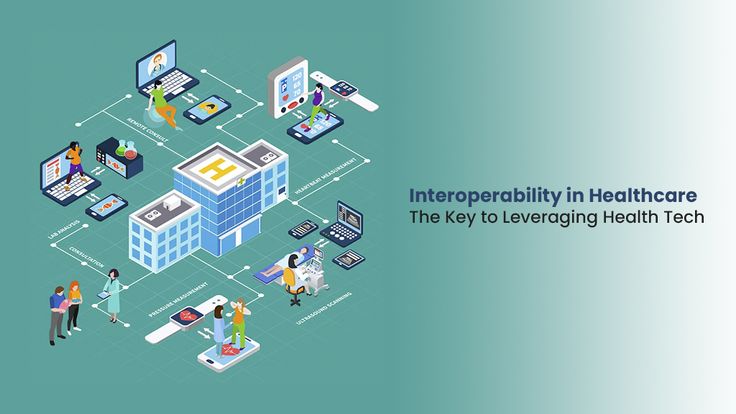
It was developed by HL7 International (Health Level Seven), the global authority on healthcare data standards. The standard defines a universal language that health systems, hospitals, labs, pharmacies, insurers, and government health authorities can all speak — so patient data can move between them cleanly and securely.
Why Is This Especially Critical in Africa?
High-income countries have spent decades building up fragmented digital health infrastructure, and FHIR was partly invented to fix that fragmentation. Africa is at a different point in the journey. Many healthcare systems are still early in their digitization, which creates both a challenge and an extraordinary opportunity.

The challenge: Across the continent, health data is siloed. A patient's records at a county hospital does not communicate with the district clinic. The pharmacy system does not sync with the EMR. The insurance scheme can not access the clinical notes, it needs to adjudicate a claim. Lab results get phoned in. Referrals happen on paper.
The consequences are real and measurable: duplicated investigations, delayed treatment decisions, medication errors, rejected insurance claims, and outbreaks that aren't detected fast enough because surveillance data isn't flowing to the right places.
What Does FHIR Actually Enable? The Practical Benefits
1. Patient records that follow the patient
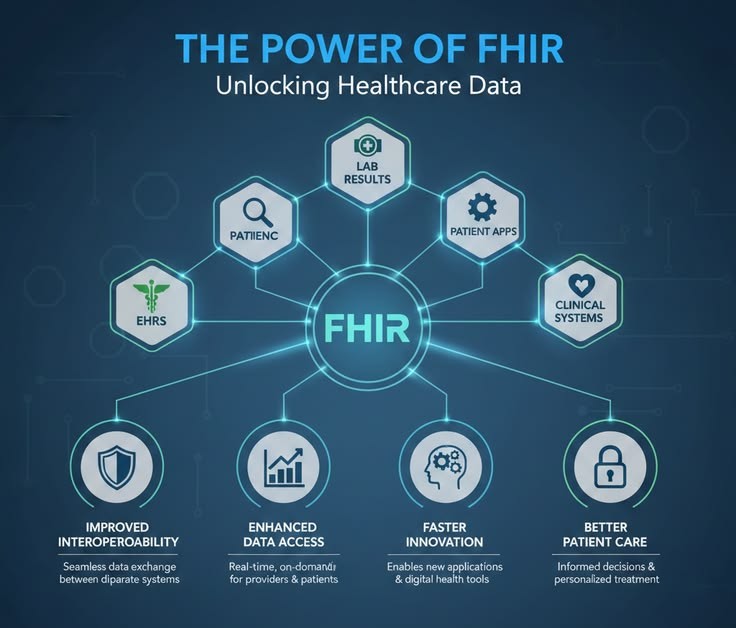
When a patient is referred from your facility to a specialist or a higher-level hospital, their clinical notes, lab results, diagnosis, and medication history travel with them - electronically, automatically, without anyone printing and scanning a discharge summary. The receiving facility sees what they need before the patient even arrives.
2. Insurance claims that are faster and cleaner
FHIR enables clinical data to flow directly into claims - correctly coded, with supporting documentation attached. This reduces the back-and-forth between hospitals and insurers that currently delays payment. SHA and private insurers alike are moving toward automated adjudication, which requires structured, standardized data at the source.
3. Lab and imaging results that land in the right system
A FHIR-compatible lab system can push results directly into the ordering clinician's patient file - in any hospital system that reads FHIR resources. No more results sitting in a separate portal. No more calling the lab for a number that should already be on the chart.
4. Pharmacy safety across facilities
A pharmacist can check a patient's medication history - including prescriptions from other facilities - before dispensing. Drug interactions that would otherwise be invisible become visible when systems can share structured medication records.
5. Public health surveillance that actually works
When hospitals report disease data in a standardized format, national health systems can aggregate it in real time. DHIS2, which Kenya and most African countries use for national health data, has FHIR integration pathways. A hospital running FHIR-compatible systems is directly contributing to the national disease surveillance infrastructure, automatically.
6. Preparedness for AI-powered clinical tools.
The next wave of clinical decision support - tools that flag deteriorating patients, predict sepsis risk, identify drug interactions - requires structured, standardized data to function. FHIR is the data layer that makes AI in healthcare possible at scale. Hospitals that build on FHIR today are positioning themselves to benefit from these tools as they mature.
What Should Hospital Administrators Do Right Now?

You don't need to become a FHIR technical expert. But you do need to ask the right questions and make the right decisions over the next 12–24 months.
1. Ask your current software vendor directly
Does your system support FHIR R4 or R4B? Can it expose FHIR APIs for patient data? Can it consume FHIR resources from external systems? If the answer is vague, that's a signal.
2. Understand what national systems you'll need to connect to:
In Kenya, this means Afya Yangu, KHIS, SHA claims processing, and potentially the Kenya Health Information Exchange as it matures. Any new system you procure should be able to connect to these without bespoke development work.
3. Review your procurement criteria
If FHIR compliance is not currently in your RFP checklist for health IT systems, add it. It will increasingly be the line between systems that integrate into the national health infrastructure and systems that don't.
4. Don't wait for a mandate
Regulatory requirements are moving in one direction. Nigeria already has mandates. Kenya's Digital Health Agency is building the interoperability framework that future requirements will rest on. The facilities that build FHIR-compatible infrastructure now will have a smooth transition. The ones that don't will face a costly retrofit.
Is Your HMIS Built for Interoperability?
When evaluating or upgrading your hospital management system, ask specifically whether it supports FHIR APIs, how it connects to national health platforms like KHIS and SHA, and whether it will integrate with the Kenya Health Information Exchange as it develops.
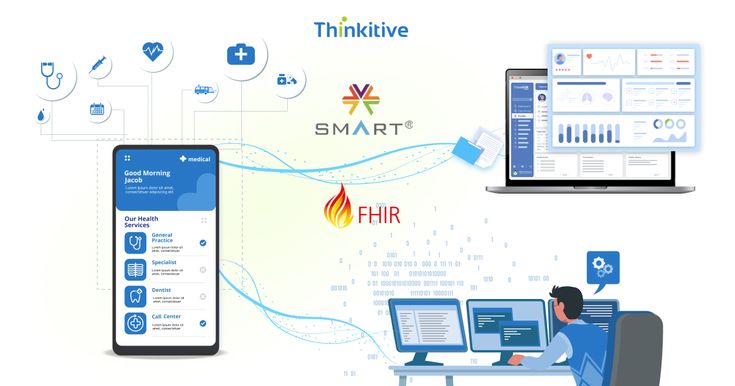
MedicentreV3 HMIS is built with interoperability as a core design principle, structured to connect with national health systems, insurance platforms, and external clinical tools using open standards..