KRA eTIMS Compliance: What Every Healthcare Provider in Kenya Needs to Know in 2026
If you run a hospital, clinic, pharmacy, or any healthcare facility in Kenya, here is something you need to know: the way KRA validates tax compliance changed permanently on January 1, 2026.
The Kenya Revenue Authority is no longer simply accepting what businesses declare. It is now cross-referencing every income and expense entry in your tax returns against its own eTIMS database - in real time. If your transactions are not in that database, they don't count.
For healthcare providers, this is not just an accounting issue. It touches every drug purchase, every supplier invoice, every receipt you issue to a patient or insurer. And most healthcare facilities are not as prepared as they think they are.
This guide explains what eTIMS is, why it matters specifically to healthcare, what the 2026 changes mean, and what happens if you're not compliant.
What Is eTIMS, and Why Did KRA Build It?
eTIMS - the Electronic Tax Invoice Management System - is Kenya Revenue Authority's digital invoicing platform. It replaces the old ETR (Electronic Tax Register) machines and manual invoice processes with a centralized, real-time system.
Every time a business issues an invoice or receipt, that transaction is transmitted to KRA's system immediately. Every time a business records an expense, the corresponding invoice from the supplier is validated against the same system.
The goal is straightforward: KRA wants to eliminate the gap between what businesses say they earned or spent, and what actually happened. Kenya loses billions in revenue each year to under-reported income and inflated expense claims. eTIMS is the mechanism to close that gap.
As of 2026, this is not a pilot program. It is a legal requirement for every person carrying on business in Kenya - including healthcare providers.
What Changed in January 2026?
The 2026 changes are significant and specific. Before this year, many businesses were onboarded onto eTIMS but enforcement was relatively loose. That changed.
From January 1, 2026, KRA began validating all income and expense declarations in your income tax returns against three data sources:
1. eTIMS/TIMS records
2. Withholding tax data
3. Customs import records
This means when you file your 2025 year-of-income returns on iTax, KRA will cross-check your declared expenses against the actual eTIMS invoices transmitted to them by your suppliers - line by line.
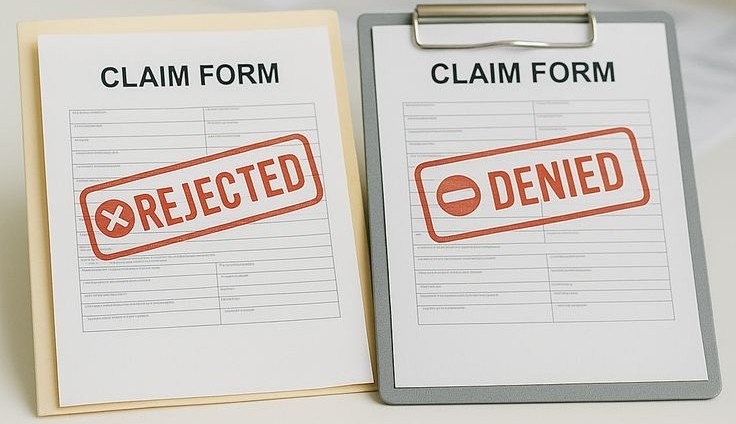
If you claim a KSh 2 million drug supply expense but your supplier never issued you a compliant eTIMS invoice? That expense gets disallowed. You pay tax on money you already spent.
The law supporting this is clear: under the Income Tax Act Section 16(1)(c), any expense not supported by a valid TIMS or eTIMS invoice cannot be claimed as a tax-deductible business expense. Under Section 86 of the Tax Procedures Act, failure to issue the required electronic invoice attracts a penalty of twice the tax due on that transaction.
Why Healthcare Providers Face Unique Exposure
Most businesses deal with a manageable number of suppliers. Healthcare facilities do not have that luxury.
A mid-sized hospital might procure from dozens of pharmaceutical suppliers, medical equipment vendors, laboratory reagent distributors, and consumables suppliers -generating hundreds of purchase invoices every month. Each one of those invoices now needs to be eTIMS-compliant for you to legally deduct that expense.
On the income side, every consultation fee, procedure charge, dispensed drug, and lab test is a taxable transaction that must be invoiced through eTIMS - whether the patient pays cash, through insurance, or through a corporate/insurance scheme.
Key Workflow Changes for Healthcare Facilities
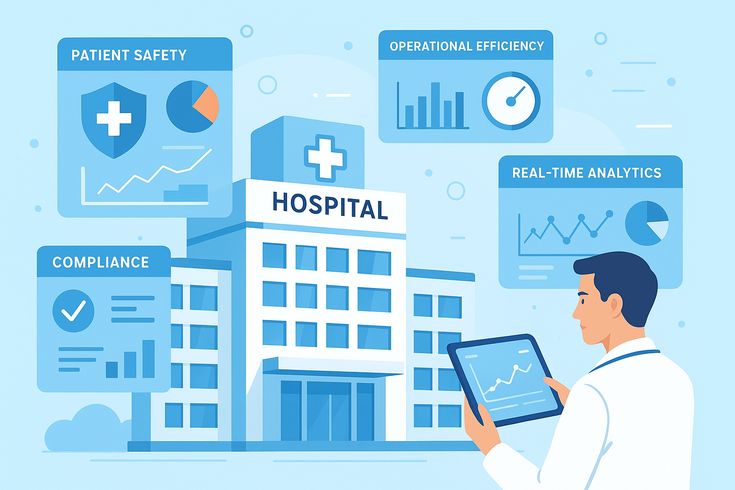
Billing and Invoicing: Every patient encounter (outpatient, inpatient, lab, radiology, etc.) must end with a KRA-compliant invoice. Instead of handwritten receipts or disjointed billing, systems must immediately issue an electronic invoice.
Procurement complexity: Drugs and medical supplies come from multiple suppliers, often with varying tax classifications. Some items are VAT-exempt, others are zero-rated, others carry standard VAT. Every classification must be handled correctly when both receiving and issuing invoices.
Insurance billing: Corporate Insurances and SHA-linked transactions still require valid eTIMS records. Insurance companies settling claims do not exempt you from your invoicing obligations.
What Non-Compliance Actually Costs You

Financial penalties
Failure to issue an eTIMS invoice: a penalty of twice the tax due on that transaction, or a minimum of KSh 1 million - whichever is higher. In cases of sustained non-compliance, penalties can reach 10 times the tax due
Disallowed expenses
Every purchase you have made without receiving a valid eTIMS invoice from your supplier becomes a non-deductible expense. If a pharmaceutical distributor supplies you drugs worth KSh 5 million but hasn't issued eTIMS invoices, you cannot legally deduct that KSh 5 million. You pay income tax as though you never incurred that cost.
Audit exposure
Businesses not compliant on eTIMS are flagged for priority tax audits. A healthcare facility managing high transaction volumes with manual or fragmented systems is an audit target.
No Tax Compliance Certificate (TCC)
KRA has updated the TCC application process to require eTIMS compliance. Without a TCC, your facility cannot participate in government tenders, public procurement, or NHIF/SHA panel processes. For facilities dependent on government referrals or NHIF payments, this is existential.
Criminal liability
Sustained non-compliance carries imprisonment of up to three years. This applies to business owners and directors, not just the organization.
What Compliance Actually Requires for a Healthcare Provider
Getting compliant isn't complicated in principle, but it requires deliberate action across three areas:
1. Onboard Your Facility onto eTIMS
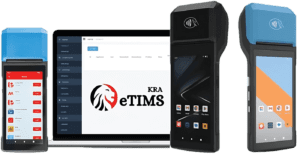
Every healthcare business must register on the KRA eTIMS portal using its KRA PIN. Once registered, you select an integration method - either VSCU (Virtual Sales Control Unit, which is cloud-based and ideal for digital systems) or OSCU (Online Sales Control Unit, a physical hardware device).
For facilities with a hospital management system, VSCU integration is the recommended path. It allows your billing system to transmit invoice data to KRA automatically, without manual intervention.
2. Ensure Your Suppliers Are eTIMS-Compliant
Compliance is not just about what invoices you issue - it is also about what you receive. If your drug supplier, equipment vendor, or service provider is not issuing valid eTIMS invoices to you, those expenses are at risk.This means you need to actively verify that your suppliers are eTIMS-registered and issuing compliant invoices. If they are not, you have a decision to make about continuing to work with them - or absorbing the tax consequences.
3. Integrate Your Billing and Procurement With eTIMS
The only sustainable way to manage eTIMS compliance at healthcare transaction volumes is through system integration. Manual entry, periodic uploads, or spreadsheet-based tracking will break down quickly and create gaps that invite penalties.
Where MedicentreV3 HMIS Fits In

Every drug and item purchase captured in MedicentreV3's procurement module is automatically recorded against your eTIMS account.
Every invoice generated within the medicentreV3 hospital system - whether for an outpatient consultation, inpatient billing, pharmacy dispensing, or insurance claim - is transmitted as a tax-compliant eTIMS invoice.
You don't need to run a separate eTIMS process or have a second system to manage. Compliance happens as a by-product of running your normal hospital operations.
For healthcare facilities not yet on MedicentreV3, the question to ask your current software vendor is straightforward: Is our system integrated with eTIMS, and are our invoices being transmitted in real time? If the answer is anything other than a clear yes - it's worth understanding what that gap is costing you.
The Bottom Line
eTIMS compliance is not a technology project you can defer. It is a legal obligation with financial penalties, audit consequences, and business restrictions attached to non-compliance.
For healthcare providers specifically, the stakes are higher than for most businesses. You operate at high transaction volumes, with complex procurement, and often depend on government health schemes that require clean tax compliance records.
The good news: the path to compliance is clear. Onboard, integrate, verify your suppliers, and make sure your invoicing infrastructure handles it automatically.
The facilities that get ahead of this now will file their 2025 returns with confidence. The ones that don't will find out what disallowed expenses actually cost - the hard way.