How MedicentreV3 Makes Hospital Software Onboarding Easier with a Role-Based LMS
Ask any hospital administrator who has been through a system change what worries them most, and the answer is rarely the software itself. It's the people.
Will the new nurses on the night shift know how to use it? What happens when your best-trained billing clerk resigns three months after go-live and the replacement has never touched the system? Who's responsible for making sure a locum doctor covering for the weekend isn't fumbling through screens while a patient waits?
These aren't hypothetical concerns. Healthcare facilities across East and West Africa deal with real staff turnover, seasonal locums, expanding teams, and the constant churn of onboarding new hires into clinical and administrative roles. A hospital system that assumes a stable, fully-trained workforce is a system built for a reality that doesn't exist.
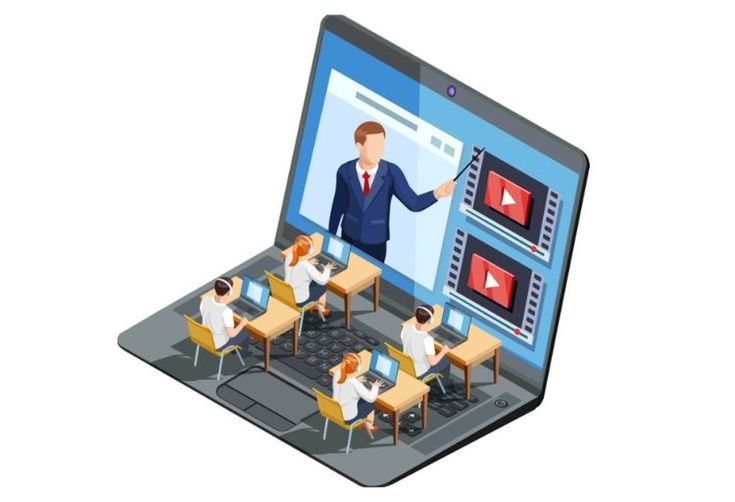
This is the problem we designed MedicentreV3's Learning Management System (LMS) to solve directly - not as an add-on training manual, but as a built-in part of how the platform actually gets used, day one and every day after.
The Real Cost of Ad-Hoc Training
Most hospital software rollouts handle training the same way: a vendor runs a few sessions before go-live, hands over a user manual, and leaves the facility to sort out everything that happens afterward. New hires get trained by whoever has five minutes to spare - usually a colleague showing them the basics between patients. Nobody tracks whether that training actually stuck. Nobody knows, three months later, whether a given user is confidently competent or quietly guessing their way through the system.
This is exactly the "framework gap" that causes so many health IT investments to underdeliver - not because the software fails, but because the people using it were never properly equipped, and nobody built a repeatable way to fix that as staff change.

For hospitals specifically, this problem compounds. Clinical staff turnover in East African healthcare settings is often higher than in many other industries - locums fill gaps, nurses rotate between departments, and administrative staff move on. Every one of those transitions is a moment where system competency either gets rebuilt properly, or quietly erodes.
A role-based, always-available LMS built directly into the HMIS is how you stop that erosion from happening.
What "Role-Based" Actually Means

Not every user of a hospital system needs to know the same things. A pharmacist doesn't need training on theatre scheduling. A billing clerk doesn't need to understand clinical documentation workflows. A nurse at triage has entirely different daily tasks than a lab technician processing samples.
Generic, one-size-fits-all training wastes everyone's time - either by overloading users with irrelevant content, or by being too shallow to actually prepare them for their specific responsibilities.
MedicentreV3's LMS assigns each hospital role its own tailored learning path. A nurse's path covers patient registration verification, vitals entry, triage risk flagging, and ward documentation. A pharmacist's path covers dispensing workflows, stock management, and prescription safety checks. A billing officer's path covers charge capture, claims submission, and payment reconciliation. Each path is built around what that specific role actually does inside the system, not a generalized tour of every feature the platform has.
This matters because it respects the reality of how healthcare staff actually learn on the job: focused, task-relevant, and applicable immediately to what they'll be doing that same day.
How the Learning Path Actually Works
Each role-based path is structured around three components, working together.
Guided lessons walk users through the actual screens and workflows they'll use in their daily role - not abstract concepts, but the literal steps of registering a patient, recording a consultation, or processing a claim. The lessons are built to be self-paced, so a new hire can work through them at whatever speed suits their existing familiarity with digital systems, without holding up a trainer's schedule or waiting for the next group session.
Interactive assessments check whether the training actually landed. Rather than a passive video someone can click through without absorbing anything, the assessments require users to demonstrate understanding - answering scenario-based questions, identifying correct workflow steps, and working through situations that mirror what they'll encounter in real use.
Certification upon completion gives both the individual user and the facility's administrators a clear, verifiable marker of competency. A certified user isn't someone who sat through a training session - they're someone who demonstrated they can use the system correctly for their role. This certification becomes part of your facility's own record of who is properly trained on what, at any point in time.
Learning Without Fear: The Demo Instance
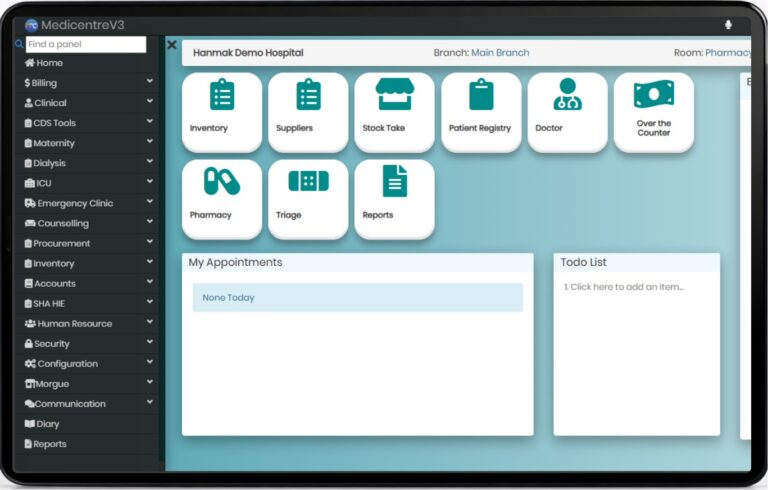
One detail that matters more than it might initially seem: MedicentreV3 provides a full demo instance alongside the LMS, where learners can actually practice inside a working version of the system as they train.
This solves a problem that plagues a lot of software training everywhere, not just in healthcare: the fear of "breaking something" in the live system. A new user working through the real production HMIS - with real patient records, real billing data, real prescriptions - is understandably cautious, sometimes to the point of being reluctant to actually try anything. That hesitation slows down genuine skill-building.
A medicentreV3 HMIS demo instance removes that fear entirely. Learners can register test patients, enter vitals, process mock prescriptions, and generate sample invoices - making mistakes freely, without any risk to real operational data. By the time they move into the live system, the screens are already familiar, the workflows are already practiced, and the anxiety of "what if I do this wrong" has already been worked through in a safe environment.
What This Looks Like from the Administrator's Seat
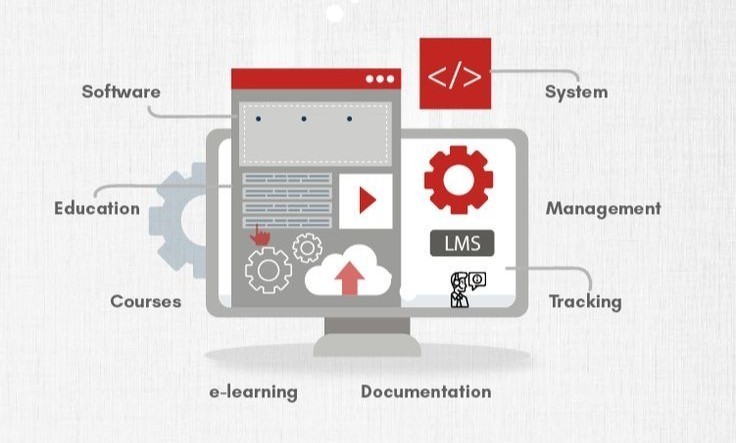
Training that happens invisibly, without any oversight or accountability, is only marginally better than no training at all. This is why the LMS isn't just a learner-facing tool - it's built with real administrative control and visibility.
A facility's system administrator can assign specific learning paths to specific users, matching training to actual role assignments rather than relying on a generic onboarding packet. When new staff join - whether that's one new hire or an entire batch brought on during a facility expansion - the administrator can add as many users as needed into the LMS without any additional cost or vendor scheduling delay.
Critically, the administrator can also see the overall learning progress of every individual learner. Who has completed their path and been certified. Who is partway through. Who hasn't started. This visibility turns training from a one-time event that happens (or doesn't) into an ongoing, trackable part of how the facility manages its workforce readiness.
This is directly relevant to the governance structures that make any HMIS implementation succeed long-term - a designated system administrator with real oversight, and training that is verified by completion and competency rather than simply assumed.
Why "Unlimited" Training Matters More Than It Sounds

We provide unlimited system training through the LMS for every client - not a capped number of sessions, not a per-user training fee, not a "contact your account manager to schedule additional training" bottleneck
This matters most in exactly the situation that worries hospital administrators most: high staff turnover. If your facility brings on ten new nursing staff for an expansion, or experiences turnover in your billing department, or brings in locum doctors for a busy season, none of that requires a new negotiation, a new invoice, or a wait for the next available training slot. The learning paths are there, ready, the moment a new user needs them.
This is also what makes the LMS particularly valuable for facilities managing multiple sites, or for larger hospitals with genuinely high staff volumes. Onboarding fifty new staff members across a facility expansion is a fundamentally different challenge than onboarding five and a system that scales training without friction is the only way that kind of growth doesn't turn into an operational headache.
What This Means If You're Evaluating MedicentreV3

If your facility is considering a new HMIS, the questions worth asking about training and onboarding are these:
Does the system's training account for the fact that your staff will change over time - not just at go-live, but continuously?
Is training role-specific, or does everyone sit through the same generic content regardless of what they'll actually be doing in the system?
Can new users practice safely before they're working with real patient data, or is their first real experience with the system also their first experience with live operations?
Does facility leadership have visibility into who is actually trained and certified, or is training something that happens in the background with no record of whether it worked?
And critically - does additional training cost more, or create scheduling delays, every time your staffing changes?
For MedicentreV3 HMIS, the answers are built directly into the platform: role-based learning paths, a safe demo environment, administrator-level tracking, and unlimited access with no additional cost as your team grows or turns over.
The Bigger Point

Implementation chaos rarely comes from the software failing to do what it's supposed to do. It comes from the gap between the system going live and the people using it actually knowing how to use it well - a gap that widens every time a staff member leaves and a new one arrives without a structured way to get them up to speed.
A role-based LMS built into the HMIS itself - with guided lessons, real assessments, genuine certification, a safe space to practice, and clear administrator oversight - closes that gap permanently, not just at the moment of go-live.
That's the reassurance any hospital considering a new system actually needs: not just that the software works, but that the people running it, today and years from now, will actually know how to use it well.